A modular self-watering planter that gives takeout containers a second life
From Waste to Resource
Plastic takeout soup containers are lightweight, durable, and already well suited for holding small plants. However, they are often discarded after only a few uses, and their varying sizes make them difficult to incorporate into existing planter systems.
RootCycle transforms these everyday containers into removable nursery pots within a modular self-watering planter. The system allows plants to be changed without repotting while giving the planter a playful, character-inspired appearance.
Design Opportunity
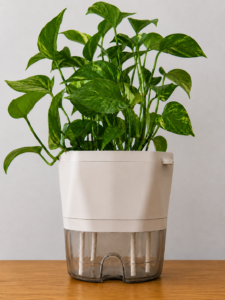
A fixed planter requires the user to remove the plant and soil whenever the planting chamber needs to be changed.
Final Design
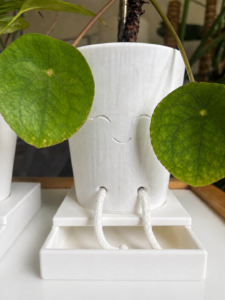
A modular redesign that supports reusable takeout
containers as interchangeable nursery pots.
PROJECT OVERVIEW
RootCycle is a modular self-watering planter designed around the reuse of plastic takeout soup containers.
A removable support insert holds different-sized containers above a water reservoir. Cotton wicks extend from the soil into the stored water, using capillary action to keep the soil moist without frequent watering.
The wicks also serve as the planter’s dangling “legs,” while the facial features give the product a friendly, playful identity. This creates a system that is not only practical and reusable, but also visually appealing enough to display in the home.
DESIGN GOALS
Create a modular planter system that:
- supports multiple takeout-container sizes
- allows plants to be removed without repotting
- maintains passive wick-based watering
- reuses existing household materials
- remains easy to assemble, refill, and clean
- feels cute and visually appealing enough to display
- incorporates the functional wicks into the product’s character and form
INITIAL CONCEPT
The first concept used a face-inspired planter form, with cotton wicks extending through the base as the planter’s dangling “legs.”
This visual decision allowed a functional part of the watering system to become part of the product’s personality rather than something that needed to be hidden. The face and wick legs were intended to make the planter feel friendly, playful, and more visually engaging than a typical utility-focused self-watering pot.
A removable insert was positioned above the water reservoir to support different-sized soup containers while keeping them elevated above the stored water. The containers could be lifted out with the plant and soil still inside, eliminating the need to repot the entire system.
Early sketches explored the planter assembly, character-inspired form, insert geometry, reservoir, and wick placement before the design moved into CAD and physical prototyping.

The Problem
Traditional self-watering planters often use a fixed planting chamber. When the plant is changed, the user must remove the soil, clean the planter, and repot the replacement plant directly inside it.
My family regularly reuses plastic takeout soup containers as nursery pots because they are lightweight, readily available, and convenient for small plants. However, the containers vary in diameter and do not fit securely inside most self-watering planters.
Many functional self-watering products also prioritize utility over appearance. I wanted to create a system that accommodated reused containers while feeling more decorative, approachable, and intentional within a home environment.
Version 1 Prototype
The first prototype demonstrated the overall modular concept but revealed several geometric and manufacturing issues that prevented the system from functioning and appearing as intended.
Container fit
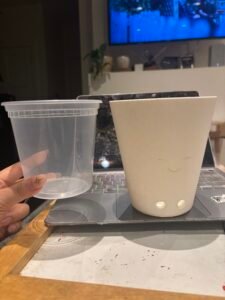
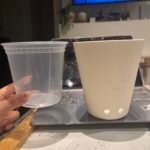
The planter walls tapered inward too quickly. Larger soup containers contacted the interior wall before reaching the support itself, preventing the container from resting at the intended hiehgt.
Facial Details
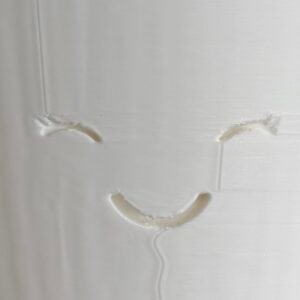
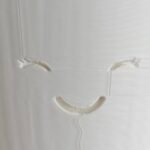
The facial features were too small and shallow to remain clearly visible after printing. Details such as the eyelashes were difficult to distinguish, reducing the playful character intended for the planter.

Reservoir Fit
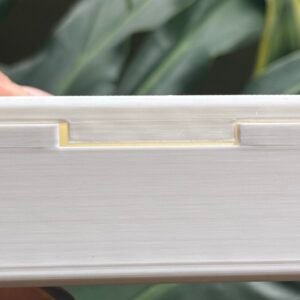
The tolerance between the water reservoir cover and the water reservoir itself was too large, creating excessive clearance between the mating parts
Design Iteration
The second iteration focused on correcting the container-fit issue while improving the planter's appearance and character.
Geometry
I remeasured the recycled soup containers, reduced the planter's taper, and increased its overall diameter. These changes created enough interior clearance for the containers to reach the support itself.
Appearance
I enlarged the facial features so they would remain visible after printing and better communicate the intended expression.
Instead of extruding the face from a flat tangent plane, I wrapped the features directly onto the curved planter surface. This allowed the details to follow the planter's geometry more naturally and created a cleaner, more integrated appearance.
The cotton wicks remained exposed as the planter's legs, preserving the connection between its watering function and playful visual identity.
System
The removable insert and wick-based watering concept remained unchanged so the revised planter geometry could be evaluated independently.
Version 2 Prototype
The second prototype successfully allowed the recycled soup container to rest on the removable insert as intended.
Reducing the taper and increasing the planter diameter resolved the primary functional issue identified in Version 1 while preserving the modular self-watering system and character-inspired appearance.
The larger facial features were also more legible, helping the planter feel more expressive and visually intentional.
Prototype Comparison
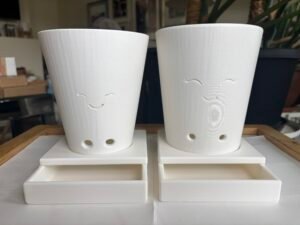
Version 1 and Version 2 showing the wider planter profile and larger, more visible facial features developed through iteration.
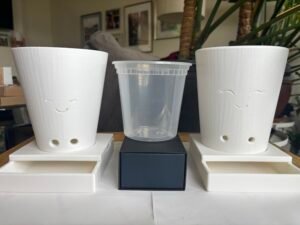
Container Fit Comparison
The revised geometry allows the same recycled container to reach and rest on the removable support insert.
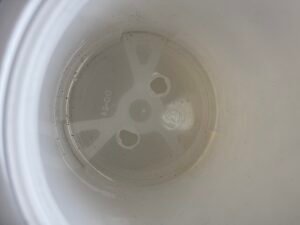
Version 1 Fit Test
The container contacts the planter wall before reaching the support insert.
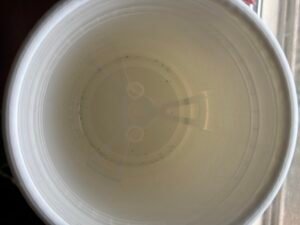
Version 2 Fit Test
The same container successfully seats on the redesigned support geometry.
Final Design
RootCycle combines a removable nursery-pot system with passive self-watering in one modular product.
The final prototype supports a reused takeout container above the reservoir while cotton wicks draw water upward into the soil. The container can be removed independently from the planter, making it easier to replace plants, inspect the roots, clean the system, or switch between container sizes.
The design turns the functional wicks into dangling legs and pairs them with a simple face, giving the planter a playful personality. This helps RootCycle feel more like a decorative home product than a purely functional watering device.
Results
The second prototype successfully supported the target takeout container on the removable insert, validating the core modular concept. Reducing the planter’s taper and increasing its diameter resolved the main fit issue found in Version 1.
The revised design also produced larger, more visible facial features while preserving the cotton wicks as the planter’s dangling legs. Together, these changes improved both the function and playful appearance of RootCycle.
Future Improvements
- Refine the reservoir tolerances for a closer and more secure fit.
- Increase the depth of the facial features while maintaining support-free printing.
- Add integrated storage for the removable insert when it is not in use.
- Improve the exterior finish through print-orientation and slicer adjustments.
- Test additional takeout-container sizes.
- Conduct longer-term testing to evaluate watering consistency and plant health.
- Explore a transparent reservoir that makes the water level easier to check.
Key Takeaways
RootCycle showed me how strongly small geometric decisions can affect an entire product system. Testing the first physical prototype revealed interference and tolerance problems that were not as obvious in CAD.
The project also taught me to treat aesthetics as part of the product’s function rather than as a final decoration. By turning the cotton wicks into dangling legs and integrating the face into the curved planter body, I was able to give necessary components a more intentional and playful role in the design.
Through this process, I strengthened my ability to design around real object dimensions, evaluate 3D-printed tolerances, and use iterative prototypes to improve both usability and appearance.
Type your paragraph here
Type your paragraph here
Type your paragraph here
Type your paragraph here
Type your paragraph here